India's Indigenous Turbofan Engine Programme (Yantar 4.5 kN Turbofan Engine)
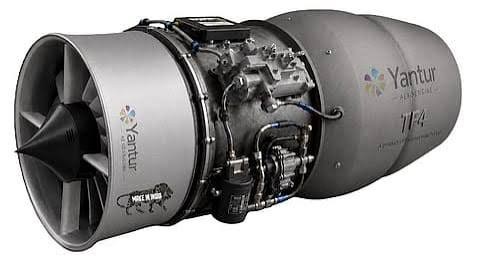
On 20 July 2026, Paninian India Pvt. Ltd. unveiled the "Yantar (Yantar) 4.5 kN Turbofan Engine Programme" in New Delhi. It is an indigenous jet engine development programme led by India's private sector, aimed at developing indigenous propulsion technology for combat drones, cruise missiles, and other autonomous aerial platforms.
UPSC Relevance
Prelims
- Turbofan Engine
- kN (Kilonewton)
- Digital Twin
- Make-I Programme
- Indigenous Defence Manufacturing
Mains (GS Paper III)
- Defence Technology
- Atmanirbhar Bharat
- Defence Manufacturing
- Role of the Private Sector
- Make in India and Defence Innovation
What is the Yantar Programme?
The Yantar Programme is an indigenous turbofan engine development initiative being undertaken by India's private aerospace sector.
Its objective is to develop indigenous engines for:
- Long-range combat drones
- Cruise missiles
- Autonomous Combat Systems
What is a Turbofan Engine?
A turbofan engine is an advanced type of gas turbine engine in which a large fan at the front accelerates additional air to generate greater thrust.
Features of a Turbofan Engine
✔ High thrust
✔ Better fuel efficiency
✔ Lower noise levels
✔ Higher overall efficiency
✔ Suitable for long-range operations
Applications of Turbofan Engines
- Fighter aircraft
- Commercial passenger aircraft
- Combat UAVs
- Cruise missiles
- Loitering munitions
- Unmanned Combat Aerial Vehicles (UCAVs)
Key Features of the Yantar Engine
|
Feature
|
Details
|
|
Company
|
Paninian India Pvt. Ltd.
|
|
Announcement
|
20 July 2026
|
|
Engine Type
|
Turbofan Engine
|
|
Base Thrust
|
4.5 kN
|
|
Maximum Scalable Thrust
|
12.5 kN
|
|
Applications
|
Combat Drones and Cruise Missiles
|
|
Current Stage
|
Subsystem Testing and Validation
|
What is kN (Kilonewton)?
kN = Kilonewton
It is the unit used to measure force and thrust.
1 kN = 1000 Newtons
The performance of a jet engine is primarily measured by the amount of thrust it produces.
Five Major Patent Claims under the Yantar Programme
- Engine family architecture
- Combustor and diffuser-nozzle design
- Advanced compressor technology
- Digital twin-based health monitoring
- Advanced manufacturing technologies
Digital Twin
What is it?
A Digital Twin is a virtual replica of a physical machine, engine, or system.
Applications
- Real-time engine monitoring
- Fault prediction
- Predictive maintenance
- Testing and validation
- Performance analysis
Svayatt L1 Platform
The Yantar engine is being integrated with the Svayatt L1 platform, which is being developed as a:
- Long-Range Autonomous Cruise Missile
- Autonomous Combat Vehicle
What is the Make-I Programme?
Make-I is a category under the Ministry of Defence's indigenous defence production framework.
Objectives
- Promote indigenous defence technologies
- Encourage research and development
- Strengthen Indian defence industries
- Reduce dependence on imports
Strategic Importance in Defence
The Yantar programme can significantly contribute to the development of:
- Cruise Missiles
- Combat UAVs
- UCAVs
- Long-Range Strike Systems
- Autonomous Weapon Platforms
Significance for India
1. Atmanirbhar Bharat
The programme will reduce India's dependence on imported jet engines.
2. Defence Self-Reliance
It will strengthen indigenous development of missiles and drones.
3. Private Sector Participation
It marks one of the first major initiatives by India's private sector to develop advanced jet engine technology.
4. Export Potential
India may emerge as a major exporter of defence systems in the future.
5. Employment Generation
The programme is expected to create employment opportunities in:
- Aerospace manufacturing
- High-tech engineering
- Defence startups
Challenges
- Jet engine technology is highly complex.
- Requires advanced high-temperature-resistant materials (superalloys).
- Lengthy testing and certification process.
- High capital investment.
- Maintaining global quality and reliability standards.
Other Indigenous Engine Programmes in India
|
Programme
|
Purpose
|
|
GTRE Kaveri Engine
|
Fighter Aircraft
|
|
HTFE-25
|
Trainer Aircraft
|
|
HTSE-1200
|
Helicopter Engine
|
|
Yantar
|
Drones and Cruise Missiles
|
Important Facts for UPSC
- Announcement: 20 July 2026
- Company: Paninian India Pvt. Ltd.
- Locations: Bengaluru and Hyderabad
- Engine Type: Turbofan
- Base Thrust: 4.5 kN
- Scalable Thrust: Up to 12.5 kN
- Applications: Combat Drones and Cruise Missiles
- Technology Used: Digital Twin
- Associated Defence Programme: Make-I
Prelims Fact Box
Turbofan Engine
- A type of gas turbine engine
- Produces higher thrust
- Offers better fuel efficiency
kN (Kilonewton)
Digital Twin
- Virtual replica of a physical system
- Enables predictive maintenance and performance monitoring
Make-I Programme
- Indigenous defence development category under the Ministry of Defence
- Government-funded prototype development programme
The Yantar Turbofan Engine Programme represents a significant milestone in India's defence-industrial ecosystem. It is not merely an indigenous engine development project but also a major step towards strengthening private sector participation in advanced propulsion technologies, promoting Atmanirbhar Bharat, Make in India, and enhancing India's defence export capabilities. If India successfully masters the design, testing, certification, and mass production of indigenous jet engines, it will substantially strengthen the country's technological self-reliance and global competitiveness in combat drones, cruise missiles, and next-generation autonomous aerial warfare systems.
Topic Related Videos ⬇️

Inclusion of the Anti-Abuse Rule (Principal Purpose Test - PPT) in the India–Sri Lanka Double Taxation Avoidance Agreement (DTAA)

India has introduced an important Anti-Abuse Rule into its Double Taxation Avoidance Agreement (DTAA) with Sri Lanka. The amendment incorporates the Principal Purpose Test (PPT) with the objective of preventing the misuse of tax treaties (Treaty Abuse) and making the international taxation system more transparent, equitable, and fair.
UPSC Relevance
Prelims
- Double Taxation Avoidance Agreement (DTAA)
- Principal Purpose Test (PPT)
- Treaty Shopping
- Anti-Abuse Rule
- BEPS (Base Erosion and Profit Shifting)
Mains (GS Paper III)
- Indian Economy
- Direct Tax Reforms
- International Taxation
- Global Economic Cooperation
- Investment and Trade
Summary of the News
India and Sri Lanka have incorporated the Principal Purpose Test (PPT) into their tax treaty.
Under the new provision, if the primary purpose of a transaction or arrangement is found to be obtaining benefits under the tax treaty, the tax authorities may deny those treaty benefits.
The objective is to curb practices such as tax avoidance and treaty shopping.
What is a Double Taxation Avoidance Agreement (DTAA)?
Definition
A Double Taxation Avoidance Agreement (DTAA) is a tax treaty between two countries that ensures the same income is not taxed twice.
Objectives of DTAA
- Eliminate double taxation
- Promote cross-border investment
- Facilitate international trade
- Reduce tax disputes
- Strengthen economic cooperation
Income Covered Under DTAA
- Dividends
- Interest
- Royalties
- Business Profits
- Fees for Technical Services (FTS)
What is the Principal Purpose Test (PPT)?
Definition
The Principal Purpose Test (PPT) is an Anti-Abuse Rule under which treaty benefits may be denied if one of the principal purposes of a transaction, investment, or corporate structure is to obtain benefits under a tax treaty.
Objectives of PPT
- Prevent misuse of tax treaties
- Discourage artificial corporate structures
- Promote genuine economic activities
- Ensure fair taxation
What is Treaty Shopping?
Definition
Treaty Shopping refers to the practice where a company or investor routes investments through an intermediate country solely to obtain lower tax rates or other benefits available under a tax treaty.
Example
If a foreign company invests in India through a third country that has a more favourable tax treaty with India, instead of investing directly, it is known as Treaty Shopping.
What is an Anti-Abuse Rule?
An Anti-Abuse Rule consists of legal provisions designed to prevent the misuse of tax treaties and ensure that treaty benefits are granted only to genuine economic activities.
Significance of the New Provision in the India–Sri Lanka DTAA
- Treaty benefits will be available only to genuine investors.
- Artificial corporate structures will be discouraged.
- Tax evasion and tax avoidance will be reduced.
- The tax framework between India and Sri Lanka will become more transparent.
- The agreement will be better aligned with international taxation standards.
Significance for India
1. Increased Tax Revenue
By preventing artificial tax planning arrangements, the government is likely to collect higher tax revenues.
2. Fair Taxation
The amendment ensures equal treatment of all investors under the tax system.
3. Better Quality of Foreign Investment
It encourages only genuine and economically meaningful investments.
4. Enhanced International Credibility
The amendment strengthens India's commitment to global tax reforms and OECD standards.
5. Effective Use of Tax Treaties
DTAA benefits will be restricted to legitimate trade and investment activities.
Challenges
- Interpretation of the term "Principal Purpose" may become a subject of litigation.
- Greater discretionary powers for tax authorities.
- Increased compliance burden for investors.
- Distinguishing genuine transactions from artificial arrangements may not always be straightforward.
BEPS (Base Erosion and Profit Shifting)
What is BEPS?
BEPS refers to tax planning strategies used by multinational enterprises (MNEs) to shift profits to low-tax jurisdictions and thereby reduce their overall tax liability.
Objectives
- Protect the tax base
- Prevent artificial profit shifting
- Promote fair international taxation
The Principal Purpose Test (PPT) is a key component of Action Plan 6 (Preventing Treaty Abuse) under the OECD–G20 BEPS Project.
OECD and the BEPS Project
- The Organisation for Economic Co-operation and Development (OECD), in collaboration with the G20, launched the BEPS Project.
- The objective is to curb tax avoidance by multinational enterprises.
- Through the Multilateral Instrument (MLI), many countries have amended their tax treaties to incorporate provisions such as the Principal Purpose Test (PPT).
Important Facts for UPSC
|
Fact
|
Details
|
|
New Provision
|
Principal Purpose Test (PPT)
|
|
Related Agreement
|
India–Sri Lanka DTAA
|
|
Objective
|
Prevent Treaty Abuse
|
|
Practice Curbed
|
Treaty Shopping
|
|
Global Initiative
|
OECD–G20 BEPS Project
|
|
Relevant BEPS Action
|
Action Plan 6
|
|
Key Benefit
|
Transparent and Fair Taxation
|
Prelims Fact Box
Double Taxation Avoidance Agreement (DTAA)
- Tax treaty between two countries
- Prevents double taxation
- Promotes trade and investment
Principal Purpose Test (PPT)
- Anti-Abuse Rule
- Prevents misuse of tax treaties
Treaty Shopping
- Routing investments through a third country to obtain treaty benefits
BEPS
- Base Erosion and Profit Shifting
- Global tax reform initiative led by the OECD and G20
Anti-Abuse Clause
- Grants treaty benefits only to genuine economic activities
- Discourages artificial tax structures
Mind Map
India–Sri Lanka DTAA
│
├── Principal Purpose Test (PPT)
│
├── Anti-Abuse Rule
│
├── Prevents Treaty Shopping
│
├── OECD–G20 BEPS
│ │
│ └── Action Plan 6
│
├── Genuine Investments
│
├── Tax Transparency
│
└── Fair International Taxation
Conclusion (UPSC Mains Perspective)
The inclusion of the Principal Purpose Test (PPT) in the India–Sri Lanka DTAA is a significant step towards aligning India's tax policy with global best practices. It seeks to prevent treaty abuse, treaty shopping, and aggressive tax planning while ensuring that tax treaty benefits are available only for genuine economic activities. In the long run, this reform will strengthen tax transparency, fair taxation, revenue protection, and India's credibility in the international tax framework, while promoting a more robust and equitable cross-border investment environment.
Topic Related Videos ⬇️