Heavy Tariffs on Indian Generic Medicines Sold in the United States
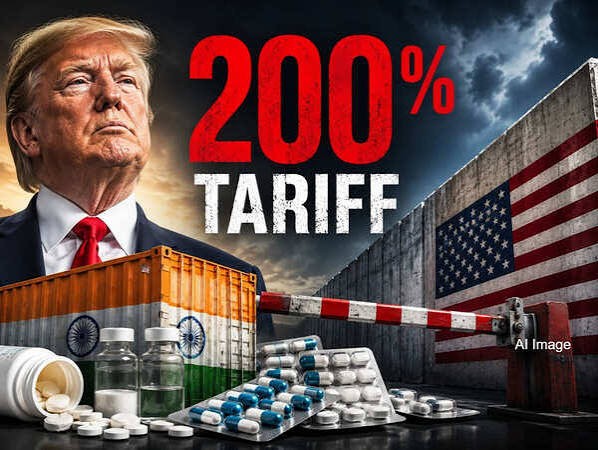
U.S. President Donald Trump announced on Wednesday that the United States will impose steep tariffs on generic medicines sold in the country. The new policy will come into effect from 1 August 2026.
Under the proposed tariff structure:
- No tariff will be imposed during the first two years.
- A 100% tariff will be levied in the third year.
- A 200% tariff will be imposed in the fourth year.
- Companies that fail to establish manufacturing plants in the United States within the stipulated timeframe will face penalties.
The move could significantly impact India's generic pharmaceutical industry, as Indian generic medicines currently enter the U.S. market without such tariffs.
According to the Global Trade Research Initiative (GTRI), the United States is the largest importer of pharmaceutical products from India. In 2025, India exported medicines worth ₹93,644 crore to the U.S.
Why Is Trump Imposing These Tariffs?
The primary objective is to revive and strengthen the U.S. generic pharmaceutical industry.
The United States is the world's largest consumer of generic medicines, and nearly 80% of these medicines are imported from India and China. Both Republican and Democratic policymakers have increasingly viewed this heavy dependence on foreign pharmaceutical supplies as a national security concern.
Why Are Indian Medicines So Popular?
Indian pharmaceutical companies are major suppliers of affordable medicines used to treat:
- High blood pressure (Hypertension)
- Diabetes
- Cancer
- Infectious diseases
- Mental health disorders
In Europe, nearly 47% of medicines used for these conditions are manufactured in India. Indian generic medicines are also up to ten times cheaper than many branded drugs sold in the United States, making them highly competitive in global markets.
Major Indian Pharmaceutical Companies Exporting to the U.S.
Some of India's leading pharmaceutical exporters include:
- Sun Pharma
- Zydus Lifesciences
- Lupin
- Aurobindo Pharma
- Cipla
- Dr. Reddy's Laboratories
Impact of Trump's Announcement
Following the announcement:
- Shares of Lupin, Sun Pharma, and Dr. Reddy's Laboratories declined by 1.08% to 4.21%.
- The BSE Sensex fell by 720 points.
- The Nifty 50 closed 191 points lower.
Industry experts believe that if the 200% tariff is eventually implemented, it could severely disrupt India's generic pharmaceutical exports to the U.S. However, since the highest tariff is scheduled to take effect four years later, there is a possibility that future political developments, including the next U.S. presidential election, could alter or delay the policy.
Importing from India Is Still Cheaper Than Manufacturing in the U.S.
Manufacturing pharmaceutical products in India is estimated to be 30% to 60% cheaper than in the United States due to:
- Lower labour costs
- Lower energy costs
- Lower operational expenses
Because generic medicines are sold at relatively low prices, importing them from India remains more cost-effective than producing them domestically in the U.S.
According to Tathagata Mangangavkar of Motilal Oswal, establishing a pharmaceutical manufacturing facility in the United States typically takes around two years. In addition, obtaining U.S. FDA inspections and product approvals requires another 12 to 15 months. As a result, Indian pharmaceutical exports are unlikely to face any major disruption in the near term. Building an entirely new greenfield manufacturing facility could take up to five years.
Fitch Ratings' Assessment
Fitch Ratings has also warned that imposing 100%–200% tariffs on generic medicines could lead to:
- Shortages of affordable medicines in the United States.
- Higher healthcare costs for American consumers.
To reduce long-term risks, pharmaceutical companies are expected to expand their manufacturing and testing facilities in the United States, enabling them to comply with future tariff requirements while maintaining access to the American market.
Topic Related Videos ⬇️