Advanced Short Range Air-to-Air Missile (ASRAAM)

The Indian Air Force is set to equip its fleet of MiG-29 fighter aircraft with the Advanced Short Range Air-to-Air Missile (ASRAAM).
It is a European-designed short-range air-to-air missile developed by the multinational company MBDA.
Key Features of ASRAAM
- The missile is approximately 2.9 metres long, weighs 88 kilograms, and is equipped with a high-explosive warhead.
- ASRAAM uses heat-seeking (infrared) technology and is optimized for close-range aerial combat (dogfights).
- It operates on the “fire-and-forget” principle, meaning that once launched, it can guide itself to the target without further input from the pilot.
- Speed: It can reach speeds exceeding Mach 3, engage fast-moving fighter aircraft at ranges greater than 25 kilometres, and deliver high accuracy.
- It features Lock-On After Launch (LOAL) capability, allowing the pilot to fire the missile even before the seeker locks onto the target.
- It has already been integrated into the indigenous LCA Tejas and Jaguar aircraft.
- The missile is highly manoeuvrable and capable of sustaining high G-forces to track rapidly turning fighter jets.
- After launch, its aerodynamic design and powerful rocket motor enable it to maintain high energy throughout its flight path.
Topic Related Videos ⬇️

Red-crowned Roofed Turtle
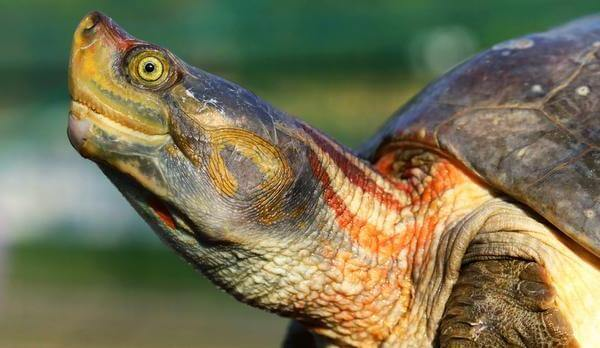
Once considered a jewel of the Ganga River, the Red-crowned Roofed Turtle is now forced to live in a shrinking habitat (sanctuary).
It is a species of freshwater turtle found in South Asia.
It is one of the three large freshwater species of the genus Batagur found in India.
Distribution
- It is found in India, Bangladesh, and Nepal.
- Historically, this species was widely distributed in the Ganga River (in both India and Bangladesh).
- It is also found in the Brahmaputra basin.
Features of Red-crowned Roofed Turtle
- Compared to females, males are smaller and reach only about half their length.
- Their head is reddish-orange in color with a black crown, and the upper shell (carapace) is greenish-brown with yellow patterns.
- Their lower shell (plastron) is yellow with black markings.
- Diet: It is omnivorous and feeds on a variety of plants and animals.
- It acts as a bio-indicator of river health.
- It contributes to nutrient cycling in the river, which is essential for the overall health of the aquatic ecosystem.
Conservation Status
- IUCN: Critically Endangered
- CITES: Appendix II
- Wildlife (Protection) Act, 1972: Schedule I
Topic Related Videos ⬇️