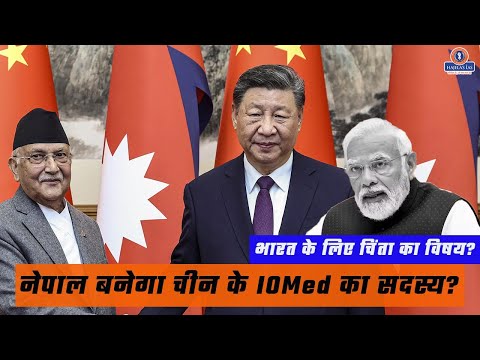
International Court of Justice (ICJ)

Introduction:
- The International Court of Justice (ICJ) is the principal judicial organ of the United Nations (UN).
- It is sometimes referred to as the World Court.
- It was established in 1945 and became operational in 1946.
Headquarters:
Structure:
- The Court consists of 15 judges.
- Judges are elected by the UN General Assembly and the Security Council.
- The term of each judge is 9 years, and re-election is permitted.
- Judges represent the world’s main forms of civilization and legal systems.
- No two judges can be from the same country.
Functions:
1. Contentious Cases:
- Only sovereign states can bring a case before the ICJ.
- The Court can hear a case only with the consent of both parties.
- The decisions are binding, but the Court has no enforcement power — enforcement depends on the UN Security Council.
2. Advisory Opinions:
- The UN General Assembly or specialized agencies can request advisory opinions on legal questions.
- These opinions are not binding, but they carry significant international influence.
Significance:
- The ICJ helps maintain international peace and security.
- It promotes peaceful settlement of disputes between countries.
- It plays a key role in the interpretation and development of international law.
Limitations:
- Only states (countries) can be parties — individuals, NGOs, or private entities cannot file cases.
- The Court lacks direct enforcement powers — it depends on the Security Council.
- Some countries at times ignore ICJ decisions.
International Court of Justice (ICJ) and India
India’s Membership and Role:
- India is a founding member of the United Nations and ICJ.
- India has participated in various ICJ cases and proceedings.
- India recognizes ICJ as a just and peaceful platform for international dispute resolution.
Major Cases Involving India at ICJ:
1. Kulbhushan Jadhav Case (India vs. Pakistan, 2017–2019):
- Issue: Pakistan arrested Indian national Kulbhushan Jadhav on espionage charges and sentenced him to death.
- India claimed denial of consular access, violating the Vienna Convention.
- India filed a petition in the ICJ.
- ICJ Ruling (2019):
- Ordered Pakistan to grant consular access.
- Directed a review and reconsideration of the death sentence.
- Did not order his release, but upheld most of India’s arguments.
2. India vs. Portugal (Right of Passage over Indian Territory, 1955):
- Issue: Portugal demanded right of passage through Indian territory to access its enclaves in Goa.
- India had blocked the route for security reasons.
- ICJ Verdict: Portugal was granted civilian access, but military access was denied.
Indian Judges at the ICJ:
- Justice B.N. Rau — First Indian judge at the ICJ (1952–1953)
- Justice Nagendra Singh — Served as President of ICJ (1985–1988)
- Justice Dalveer Bhandari — Serving since 2012, re-elected in 2020
India’s Perspective and Policy:
- India views ICJ as a neutral and balanced institution.
- India prefers to resolve international disputes through diplomatic and judicial means.
- However, on issues of national security and sovereignty, India has challenged ICJ’s jurisdiction.
Topic Related Videos ⬇️
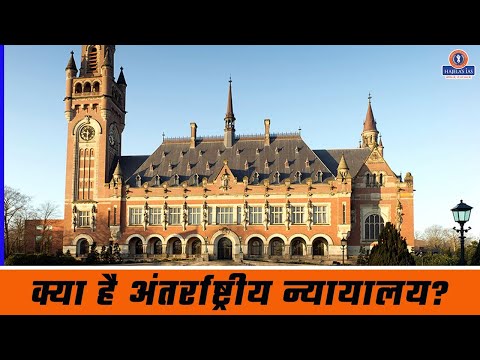
International Organization for Mediation

China establishes a new organization to resolve international disputes: Seen as an alternative to the International Court; 33 countries including Pakistan and Cuba become members
A conference was held in Hong Kong to mark the establishment of the International Organization for Mediation (IOMed).
On 30 May 2025, China launched a new international organization aimed at resolving global disputes. The organization is named the International Organization for Mediation (IOMed). It is being presented as an alternative to institutions like the International Court of Justice (ICJ) and the Permanent Court of Arbitration (PCA).
Around 400 senior officials from 85 countries and approximately 20 international organizations participated in the event. Out of these, 33 countries immediately signed on and became founding members of IOMed.
China’s state-run newspaper Global Times described IOMed as the world’s first inter-governmental legal organization focused on resolving international disputes through mediation.
Headquarters in Hong Kong
During a high-level event in Hong Kong, Chinese Foreign Minister Wang Yi formally signed the agreement to establish IOMed.
Countries like Indonesia, Pakistan, Belarus, Cuba, and Cambodia were among the 33 nations that joined China as founding members of the organization.
The headquarters of IOMed will be in Hong Kong. Chinese Foreign Minister Wang Yi said that Hong Kong itself is an example of how disputes can be resolved peacefully.
What is the difference between IOMed and the International Court of Justice (ICJ)?
Both organizations are aimed at resolving international disputes, but they differ significantly in structure, function, and legal authority.
IOMed (International Organization for Mediation):
- Established on 30 May 2025 in Hong Kong by China, with greater Chinese influence.
- 33 founding member countries, including Indonesia, Pakistan, Belarus, Cuba, and Cambodia.
- Purpose: To resolve disputes only through mediation, not adjudication.
- Voluntary agreements: If any party disagrees, no binding decision will be issued.
- Who can file cases: Not just states—foreign nationals and international business organizations can also submit disputes.
International Court of Justice (ICJ):
- Headquartered in The Hague, Netherlands, and established in 1945.
- Composed of 15 judges, elected by the UN General Assembly and Security Council for 9-year terms.
- Operates under the United Nations Charter—all UN member states are automatically parties to the ICJ.
- A formal court that delivers binding decisions based on international law.
- Only sovereign states can bring cases before the ICJ.
IOMed will function solely for mediation
Chinese Foreign Minister Wang Yi stated that China wants to resolve global issues through dialogue and understanding, not through conflict.
He emphasized that IOMed aims to move beyond the "you lose, I win" mindset.
Its goal is to resolve disputes between states, foreign nationals, and international commercial organizations, but only through mediation, not litigation.
Potential rise of Chinese influence in the Global South
- This initiative could increase China’s influence in many developing nations and the Global South.
- However, due to China’s debt policies and expansionist approach, concerns have been raised over IOMed's impartiality and credibility.
China claims the organization will adhere to the UN Charter and international law.
China Pressures Nepal to Join New Mediation Body; Pakistan Signs On — Dragon’s Strategy to Encircle India!

In recent years, China has been attempting to expand its influence in neighboring countries, with the strategic intent of marginalizing India. As part of this effort, Beijing has launched a new international mediation body — the International Organization for Mediation (IOMed).
A key element of this push includes China urging Nepal to join IOMed, in an effort to expand its footprint in South Asia. By pulling Nepal into this orbit, China seeks to strengthen its influence in the region, leaving India diplomatically isolated.
China Pushes Nepal to Join IOMed
China has formally requested Nepal to become a part of the recently formed IOMed. This move is seen as a significant step toward expanding China’s dominance in South Asia.
In recent years, China has established a deep strategic presence in Pakistan, and now seeks to replicate that success with other neighbors.
This would not only boost China’s diplomatic clout in South Asia, but also pose a strategic challenge to India.
According to a Firstpost report, the primary aim of IOMed is to enhance China’s global influence through multilateral dialogue and conflict resolution mechanisms.
Chinese Foreign Minister Wang Yi has urged Nepali Foreign Minister Arzu Rana Deuba to join IOMed at the earliest.
Although Deuba attended the launch ceremony, Nepal has yet to make a clear commitment to joining the organization.
Pakistan Becomes a Founding Member
China’s close ally, Pakistan, has officially signed on as a founding member of IOMed.
Pakistan’s Deputy Prime Minister and Foreign Minister Mohammad Ishaq Dar personally participated in the signing ceremony, solidifying Pakistan’s place as a founding state in this new institution.
Objective of the New Mediation Body
Chinese Foreign Minister Wang Yi stated that the new body aims to provide a voluntary and efficient platform for dispute resolution in cooperation with countries like Pakistan and others.
He added that IOMed will serve as a new platform to promote peace, stability, fairness, and justice in the Global South.
According to China, IOMed can play a key role in fostering stability and prosperity across developing nations.
Nepal’s Inclusion: Strategic Move for South Asia
China’s invitation to Nepal is seen as a strategic move to expand its influence in South Asia.
If Nepal joins, it would further strengthen China’s regional positioning and mark a major success in China’s foreign policy objectives.
India’s Growing Concerns
This development could pose a significant diplomatic challenge for India, which is already concerned about China’s rising influence in South Asia.
The establishment of IOMed may further tilt the balance of regional power in China’s favor.
India may need to rethink its diplomatic strategy and devise new approaches to counter this challenge.
Will IOMed Succeed?
It remains to be seen how successful IOMed will be.
Its effectiveness will largely depend on the support and cooperation of its member states.
If the organization proves capable of resolving disputes and maintaining peace, it could become a significant player on the global stage.
However, it still needs to prove its credibility and effectiveness in the eyes of the international community.
Topic Related Videos ⬇️