Trump to Apple CEO: Stop Making iPhones in India

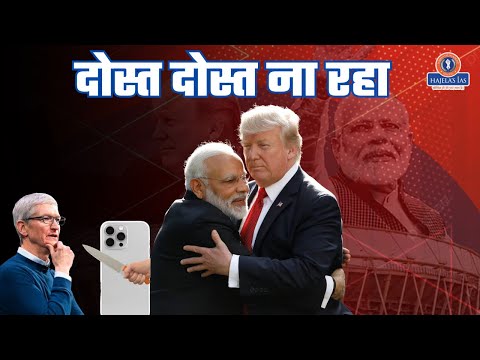
During his state visit to Qatar, U.S. President Donald Trump referred to a conversation he had with Apple CEO Tim Cook, saying:
"I had a bit of an issue with Tim Cook yesterday."
According to news agency reports, President Trump stated:
"We’re not interested in you doing construction or manufacturing in India. India can take care of itself."
Trump criticized India for having one of the highest tariff barriers in the world and remarked that selling American products in the world’s most populous country is very difficult.
However, he acknowledged that India has offered to reduce tariffs on American goods, as the Asian country seeks to negotiate on import taxes.
Impact on Apple’s India Strategy
Trump’s statement may impact Apple’s plan to source most of its U.S.-bound iPhones from India by the end of next year. This plan was part of Apple’s strategy to reduce dependence on China due to high tariffs and geopolitical tensions.
Currently, Apple manufactures most of its iPhones in China, with no smartphone production in the U.S.
The process of moving away from China accelerated when strict COVID lockdowns disrupted production at Apple’s biggest Chinese plant.
Additionally, Trump-era tariffs and growing U.S.-China tensions further pushed Apple to diversify manufacturing.
India: Apple’s New Manufacturing Hub
Most of the iPhones made in India are assembled at Foxconn’s plant in South India.
Other major contributors include:
- Tata Group, which acquired Wistron’s local business and operates Pegatron Corp’s units in India
- Both Tata and Foxconn are expanding capacity by building new plants in Southern India
Apple assembled $22 billion worth of iPhones in India in the 12 months up to March, marking a 60% increase in production compared to the previous year.
Will Tim Cook Agree to Trump’s Demand?
So far, Apple has not issued a clear statement in response to President Trump’s remarks.
Some reports suggest the company wants to continue manufacturing in India, while others hint that Tim Cook has agreed to start production in the U.S.
iPhone Manufacturing to Continue in India
Apple reportedly believes that India offers one of the best manufacturing ecosystems for global smartphone makers.
The company understands the competitive advantage it gains from India, including government incentives.
In fact, Apple stated last month that most iPhones sold in the U.S. starting this June quarter will be 'Made in India'.
Company sources suggest that despite Trump’s recent comments, Apple’s investment plans in India remain unchanged.
Apple intends to move ahead with setting up a large-scale manufacturing plant in India.
Apple’s Investment in the U.S.
Trump claimed that Tim Cook agreed to increase iPhone production in the U.S., and Apple had announced a $500 billion investment to begin manufacturing in America by February.
This initiative will include the setup of multiple factories in the United States.
Challenges of Manufacturing in the U.S.
While President Trump prioritizes "Made in America," it’s not easy for companies like Apple to shift production.
Key issues include:
- High labor costs and overall production expenses in the U.S.
- Limited infrastructure, which needs massive rebuilding
- In contrast, India’s production infrastructure is rapidly developing
- Production costs in India are much lower compared to the U.S.
Additionally, companies in India benefit from schemes like PLI (Production Linked Incentive) and tax incentives.
(PLI is a flagship industrial policy of the Indian government aimed at boosting domestic manufacturing and integrating India into the global supply chain.)
What Will Apple Do?
Even if Apple begins manufacturing in the U.S., it may be only for domestic demand.
For its global supply chain, the company is likely to continue focusing on India as a strategic manufacturing hub.
Topic Related Videos ⬇️
Boycott: Turkey and Azerbaijan

During Operation Sindoor, Turkey and Azerbaijan supported Pakistan, prompting Indians to launch a major 'strike' in response.
A wave of boycott against Turkey has now begun across India.
Why the Boycott of Turkey and Azerbaijan?
- Turkey supplied over 350 drones to Pakistan.
- Turkish President Recep Tayyip Erdoğan has consistently referred to Pakistan as a true friend in joy and sorrow.
- Azerbaijan also supported Pakistan and has backed it on international platforms, along with Turkey.
Economic Impact of the Boycott
This growing boycott campaign — particularly the #BoycottTurkey movement — is gaining momentum across India.
As a result:
- Turkey could face losses of around ₹5,000–₹6,000 crore (approx. $600–$720 million) annually.
- Azerbaijan could incur losses of around ₹4,000 crore (approx. $480 million) due to its ties with Pakistan.
Traders and Logistics Operators Impose Restrictions
- Trade organizations across India have already banned the import of goods from Turkey and Azerbaijan.
- Truck operators have refused to transport goods from these countries within India.
- These groups have reiterated their demand to the central government to cut all trade relations with both nations.
Tour Operators Halt Bookings
- Several travel agencies in India have stopped bookings to Turkey.
- During the summer season, many Indian tourists who planned trips to Turkey and Azerbaijan have cancelled their tours.
- Tour cancellations have risen by up to 250% for both countries.
The Indian government has also advised citizens to avoid non-essential travel to these countries.
Gujarat Takes the Lead
- In Gujarat, travel agencies have taken a strong stand, halting bookings to Turkey.
- Azerbaijan has also been boycotted for its support of Pakistan.
- In recent years, Turkey even held roadshows in Ahmedabad due to the high number of Gujarati tourists.
- Azerbaijan Airlines had launched a direct flight from Baku to Ahmedabad due to large tourist volumes.
- Now, many Gujarati tourists are canceling their advance bookings for Turkey vacations.
Industry Leaders and Travel Agencies Join In
- According to Prashant Pitti, co-founder of EaseMyTrip, the boycott could result in a loss of nearly ₹5,000 crore for both Turkey and Azerbaijan combined.
- Travel companies like Cox & Kings, MakeMyTrip, Goa Villa, and Go Homestays have also stopped taking bookings.
- Swadeshi Jagran Manch has appealed to Indian tourists to avoid visiting Turkey and Azerbaijan.
- On social media, hashtags like #BoycottTurkey are trending, with people voicing their support for the campaign.
Tourism Stats & Industry Reaction
- Last year, approximately 2.5 lakh (250,000) Indian tourists visited Turkey, and around 2.3 lakh (230,000) visited Azerbaijan.
- Businessman Harsh Goenka remarked:
“Indian tourists have injected thousands of crores into Turkey and Azerbaijan’s economies, boosting jobs, hotels, and airlines. But these nations supported Pakistan, the perpetrator of attacks like in Pahalgam. Now it’s time to teach them a lesson.”
He added:
“There are many beautiful places in India and around the world. Please avoid these two.”
Institutional & Market-Level Boycotts
- Jawaharlal Nehru University (JNU) has suspended its MoU with Turkey's Inonu University.
- Vegetable markets in Ghaziabad and Sahibabad (U.P.) have stopped importing Turkish apples.
- Marble traders in Udaipur (Rajasthan) have also decided to boycott Turkish imports.
Kapil Surana, president of the Udaipur Marble Processors Committee, told ANI:
"Udaipur is Asia’s largest export hub. We've decided not to import goods from Turkey due to its support for Pakistan. India imports 1.4 to 1.8 million tonnes of marble annually, and about 70% of that comes from Turkey."